Nasir M Motors Company | 22 November 2026
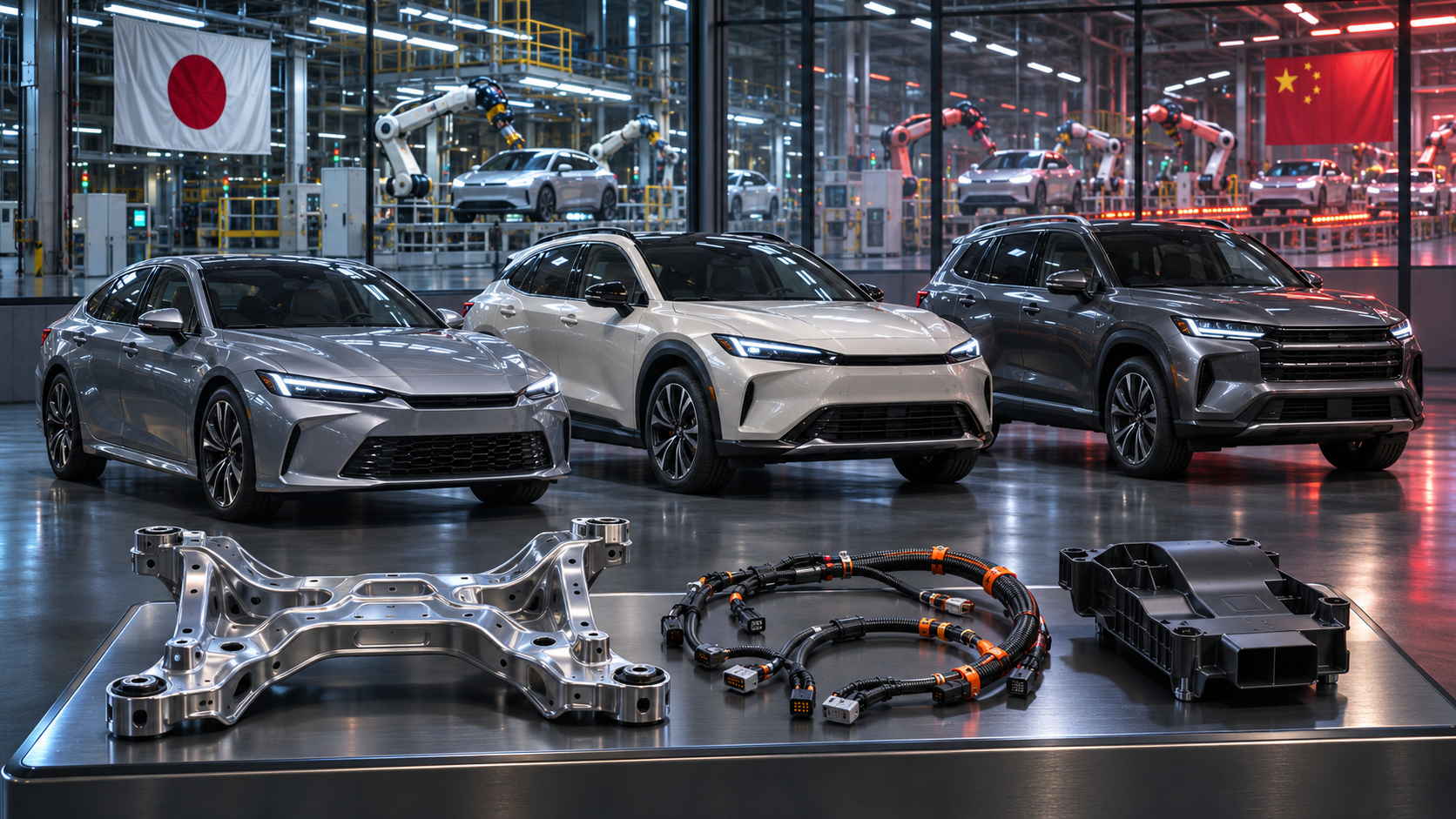
Competition between Japanese and Chinese carmakers is prompting changes behind the factory gates. On 19 November, the Japan Automobile Manufacturers Association (JAMA) and the Japan Auto Parts Industries Association (JAPIA) announced plans to standardize requirements for selected materials and components.
The initiative comes as Chinese manufacturers gain ground internationally, supported by domestic supply networks that help them develop vehicles quickly. Major Japanese brands, including Toyota, Nissan and Honda, are part of the industry moving toward closer cooperation.
⚙️ Which components come first?
The initial focus is steel, plastic resins and wiring harnesses. Manufacturers aim to consolidate low-volume steel materials, initially focus resin work on recycled materials, and reduce wire varieties to make production easier to automate.
These are areas buyers rarely notice when choosing a car, but they contribute to manufacturing complexity and cost.
🏭 Why would rival brands cooperate?
The goal is to spend less on overlapping requirements and leave more resources available for new vehicles and technologies. Jiji Press reports that JAMA has 14 member companies, giving the initiative a broader industry scope than a partnership between two brands.
Manufacturers can continue competing through their products while reducing unnecessary differences in the specifications they send to suppliers.
🔧 Will Toyota parts fit Nissan cars?
That is not what the announcement establishes. A common material or wiring standard does not automatically make finished components identical in size, connections or software requirements. Buyers should not interpret the initiative as universal parts compatibility across Japanese brands.
🇸🇦 Could Saudi car prices fall?
Lower production costs are an objective, but no Saudi vehicle or replacement-parts price cuts have been announced as a result of this initiative. Manufacturers may invest the savings in development rather than pass them directly into retail prices.
For Saudi buyers, the meaningful test will be the equipment and pricing of future models. This announcement concerns how the industry builds cars; it is not a discount campaign already available in showrooms.